Tuesday, October 23, 2012

Blog #5 - The Birthmark

     Last week in class, we read The Birthmark by Nathaniel Hawthorne. The Birthmark is a story about a man named Aylmer and his wife, Georgiana. Aylmer is a scientist, and he is married to one of the most beautiful women who could, in a sense, be deemed as perfect. But to Aylmer, she is very much NOT perfect because of a birthmark that's on her cheek. The birthmark appears to be in the shape of a little hand, and shows up severely when Georgiana shows certain emotions. Over time, Aylmer cannot deal with the birthmark. Georgiana had always been alright with the mark and was shocked when Aylmer wished to remove it. Eventually, Georgiana could not stand the thought of the mark being on her cheek and decides to let Aylmer try his hand at removing it. Aylmer succeeds in removing the mark, but it kills Georgiana.

     In today's society, this theory of removing imperfections is still there and is even more involved. Over time, doctors and scientists have developed new ways to fix our physical imperfections. But why? Why can't people just be happy with themselves? Instead, we are constantly trying to change the way we look. We dye our hair, we remove pimples, we use colored contacts, and some people even have plastic surgery to more permanently change one (or more) of their body parts.

     For instance, let's take a look at Heidi Montag. She's undergone a ridiculous amount of plastic surgeries over the years and has been in the public spotlight for it. Here's Heidi's transition: 
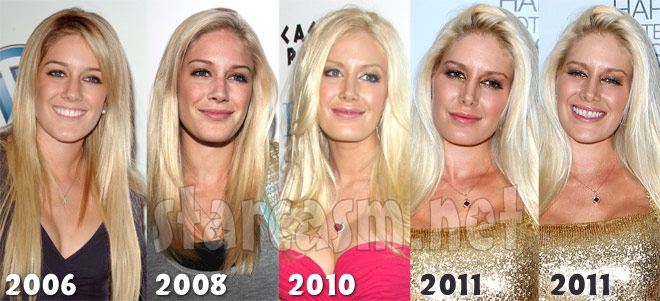


     In 2006, Heidi looked perfectly normal. At least in my opinion she did. In 2011, she was barely recognizable as the person she was in 2006. I'm not exactly sure why she wanted all of these changes or who might have possessed her to make these changes. But as far as I'm concerned, Heidi Montag is a perfect example of the message Hawthorne was trying to make.

     According to John Schlismann, Hawthorne's story is just a relevant today as it was when he wrote it. We have been doing everything in our power to change the ways of Mother Nature and we do not like to fully accept who we are. Schlismann says that, "When man tries to accomplish what he was not intended to accomplish, disaster will be the ultimate result." This is true in the case of Heidi Montag. By changing herself drastically and not embracing who she was, she got a lot of crap from the media. The media's comments could have potentially damaged her reputation and the way she thinks about herself. Schlismann also says:

"This goes back to what makes us who we are; we are not pure flesh and blood, our psyches and our true selves go so much further beyond that. Nathaniel Hawthorne's short story The Birth Mark touches on philosophical and ethical issues valid in his time, as well as ours. His work makes us think about what is perfection and is it desirable in the physical state. In the end we discover that if we overstep our bounds and try to make perfect that which is imperfect, death will be the final result, for only in death through God, can we achieve perfection."
     Regardless of what changes we make in relation to our physical appearances, we are still the same person on the inside. Changes on the outside do not affect what's at our core. In the words of Lady Gaga, "There's nothing wrong with loving who you are, she said 'Cause He made you perfect.'" But unfortunately some people must change themselves on the outside in able to do that and think they are perfect.

     And on that note, I'll leave you all with this:


Tuesday, October 9, 2012

Blog #4 - Why Do We Read/Watch Fiction?

     One day in class, we read Rip Van Winkle by Washington Irving. Mostly everyone knows the story of Rip. He was the man that fell asleep and woke up 20 years later and everything had changed. Naturally, this is most likely not a true story. But if it's not a true story, then why do we read it? 

     In class, we discussed why we read or watch fictional stories. We talked about Harry Potter, Transformers, Jaws, etc. We came to the conclusion that these fictional stories have deeper meanings than what's seen. They aren't just about the wizards, robot cars, and a big shark. We determined that the underlying meaning reflects what society is thinking about at the current time of production. Although this is true, there's another detail that we missed in class.


     Fictional stories not only teach us about things that don't exist, but they teach us about ourselves as real human beings. Psychologist Keith Oatley says, "They train us in the art of being human." He says that we tend to think of watching movies as being a passive activity, but that thought is not true when it comes to our emotions. When we're watching a movie, we have empathy for the characters, and we can relate to them. If the writing or movie is powerful enough, we can feel the emotions of the characters as they are feeling them. Oatley says, "The feelings elicited by fiction go beyond the words on a page or the images on a screen." After we've read or watched a piece of fiction, we can oftentimes think about how they relate to our own lives.


     For instance, let's go back to Harry Potter. On the surface, Harry Potter seems like it's a movie solely about this magical wizarding world that doesn't actually exist. In reality, it's MUCH more than that. Harry Potter has themes about love, friendship, good and evil, and education. These are all themes that we can take to heart and use in our real lives. Joyce Pines, of the Kalamazoo Gazette, says, "It [Harry Potter] is a remarkable story that reminds us that, no matter what life throws at you, you must do what is right. They are a guide, presented in an entertaining format, to help us understand the difficulty of life's journey."  A memorable lesson from the series is love and knowing that love is something that will prevail for all time. Here's a clip from the last movie, Deathly Hallows: Part 2, that sums this up in a nutshell. (ALERT! This clip is a spoiler if you haven't read or watched Deathly Hallows. It also might make you cry if you're a sap like me.) 


     So do we really read or watch fictional stories solely for the entertainment factor? Sometimes, yes. Oftentimes, no. We embrace fictional stories because of the impact they can have on our views on life and our emotions. Next time you're watching The Walking Dead, Firefly, or any other fictional story, go beyond the surface and think of what it really means, even if you have to go back a couple of decades. We can always learn new ideals and lessons from people, objects, and places that aren't actually on a real map. 

Wednesday, September 26, 2012

Blog #3 - Thomas Jefferson and Free Inquiry

    When I first began reading Thomas Jefferson's writings, I didn't really think they'd be all that interesting. But as I progressed, I found that he's quite the intriguing person. The section on religion from "Notes On the State Of Virginia" particularly interested me.

    Jefferson, one of the Founding Fathers of our country, (which is supposedly "One nation under God" according to the Pledge of Allegiance) was often accused of being an Atheist. An Atheist, you say? Yes. He was often accused of being an Atheist during the party conflicts between the Republicans and the Federalists in the latter part of the 1790s (Jefferson's Religious Beliefs). This is probably because he had a different view on Christianity and felt like one should have the right to free inquiry. 

    Jefferson rarely ever commented on his own religious beliefs, but more or less commented on how he felt about everyone else's religious beliefs. He believed that everyone should have the right to free inquiry, and he states in the religion section of "Notes On the State Of Viriginia" that "Had not the Roman government permitted free inquiry, Christianity could never have been introduced." He also told his own nephew:
"Question with boldness even the existence of a god; because, if there be one, he must more approve the homage of reason, than that of blindfolded fear." (Thomas Jefferson to Peter Carr, 10 August 1787, in PTJ 12:15.)
   Jefferson did attempt to search for his own religion, but he did not follow that exactly of Christianity. He believed in a Supreme Being, but he rejected the idea of the divinity of Christ (Jefferson's Religious Beliefs). He also said to Ezra Stiles Ely, "I am a sect by myself, as far as I know."

I also find it interesting although he didn't really believe in Christianity, Jefferson still attended church on a regular basis and donated to various local churches "out of respect for public worship" (Smith, First Forty Years, 13). 

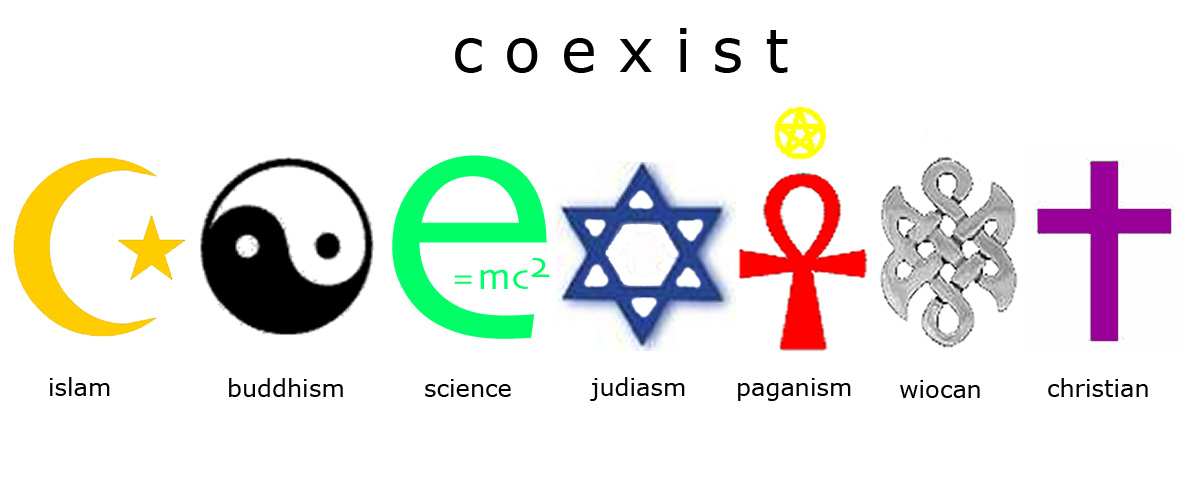
Jefferson's outlook on religion to me was more or less is: If you are believing in one God or multiple gods and it does no harm to me, then I don't care what you think. I have to agree with him on that one. If you aren't outside screaming and hollering in the middle of the night due to your religious views, I don't care what your religious views are and I'll still respect you. Wouldn't it be nice if we could all just...

Tuesday, September 18, 2012

Blog #2 - John Smith and Pocahontas (Movie vs. Reality)

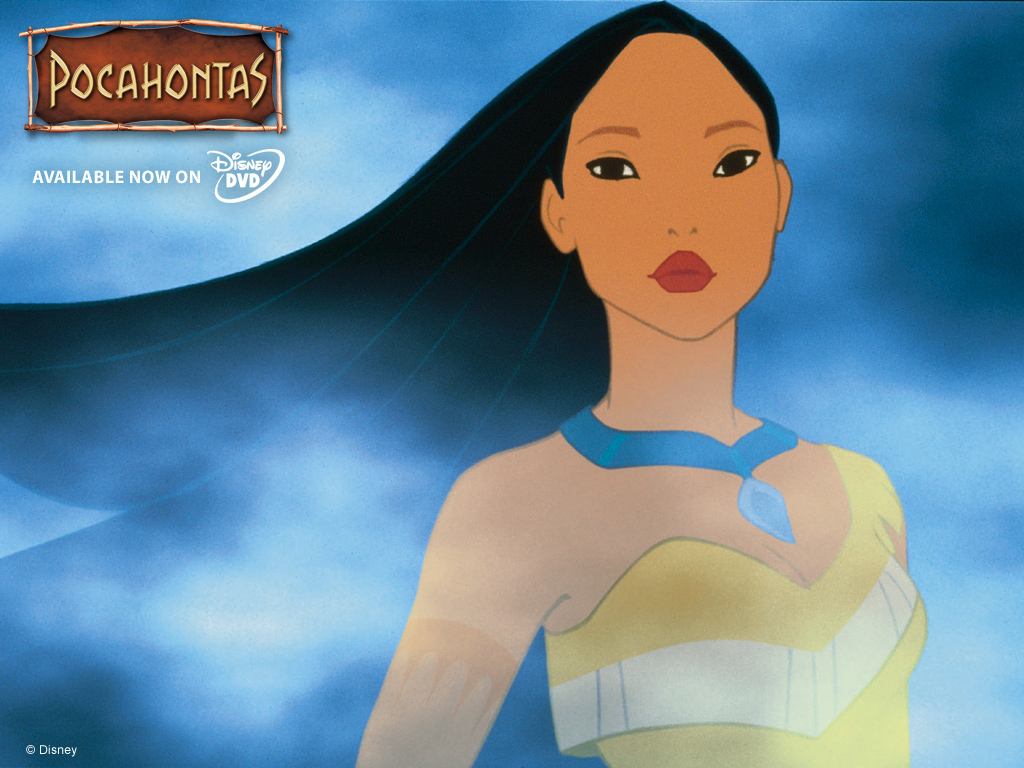
As I was reading John Smith's accounts of his story with the Indians, I thought about the Disney movie we all know (and mostly all love), Pocahontas. Pocahontas, like all Disney movies, is a sappy love story that's kinda sorta based on something that actually did happen. But just how much of that movie is based off of the real facts? Not a lot.

In the movie, Pocahontas is a beautiful, young woman who appears to never have a bad hair day, despite the fact that she's a "savage." She also had a tattoo and wore a leather mini dress. In real life, she was a naked child when she first visited John Smith. John Smith is a handsome, tall, blonde man who wore some armor. In real life, he was short with a full beard and wore puffy pants.
In real life, they really looked like this: 
Practically identical, right? There's also more to it than just their appearances, though. 
According to http://pocahontas.morenus.org/, there are several things in the movie that are different (because of the Disney rewrite), but there are some things in the movie that do represent what historically really did happen.
  1. In the movie, both Pocahontas and John Smith were young when they met. In real life, Pocahontas was 11 and John Smith was 28. 
  2. The colonists in the movie sailed on a ship called the Susan Constant. Historically, they sailed on 3 ships, one of which was called the Susan Constant. 
  3. John Smith was captured when he set out to visit Pocahontas, whereas in real life, he was captured when he and his Indian guide split off from the rest of the expedition. 
  4. In the Disney movie, John Smith's compass showed Pocahontas where he true path lay. In reality, John Smith used his compass to describe how the earth was actually round and how objects in space revolve around one another.
  5. Pocahontas was engaged to Kocoum, but chose John Smith instead. In reality, she ended up marrying John Rolfe. 
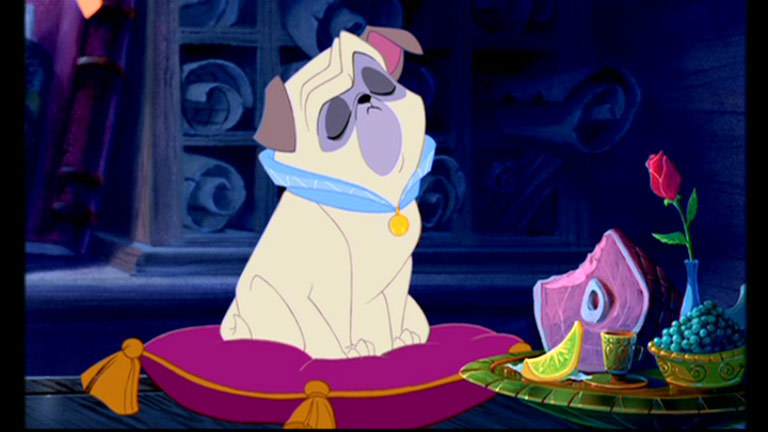
Also in the movie, we see the characters Percy and Thomas. Percy was Ratcliffe's dog, and Thomas was a young friend of Smith's.


Percy
Thomas
George Percy was a prominent colonist who followed Smith as council president, and wrote two books about his experiences. A clever name for the dog! Thomas Savage, young laborer, arrived in January 1608, and was sent to live with Powhatan the next month, sort of like a "cultural exchange student." (The Real Pocahontas)

So some of the action in the movie was actually inspired by real life events. If you know the real history, it makes the movie that much more appealing. Even the song "Colors of the Wind" probably had some sort of historical accuracy. Listen to the words, and learn a life lesson! :) 


Monday, September 3, 2012

Blog #1 - Columbus to Creationism

     As I was reading the Introduction, I noticed a connection between how the Indians were mistreated on their own land and forced to move and die off to the situation of the LGBT community today.

     In America, the quote "Your land is my land" has been around for awhile. We're all supposedly deemed "equal." But is this really true? Not at all. At least not in my opinion. Just like when "America" was first established, we are STILL trying to force people to conform to our wants. There are so many issues now with the LGBT community. Many people in this nation don't like the fact that they want their rights to marriage and equality, just like the rest of the American population. They're being denied their rights, even though we're all equal. One could even go as far as to say that we're trying to do them like we once did the Indians...push them out of our population. The Indians were sent on the Trail of Tears, and soon began to die off. Now, only a few exist. Sooner or later, it might become the same way with the LGBT community if some change doesn't happen. Charles Worley, a North Carolina preacher, believes that all of the LGBT community should be fenced so that they can't reproduce and will die off. (View the video here.) Some big-time corporations, like Chik-Fil-A (which I'm sure most of you have heard about already) are even funding anti-gay organizations that are trying to make gay actions illegal and groups that feel as if the gay community should be exported out of America. If you're a supporter of Chik-Fil-A and aren't knowledgeable as to where their money is going, I strongly encourage you to read this article. What I concluded from the reading and this connection though, is that there's ALWAYS going to be some form of hate crimes going, regardless of the time. Unless we make some serious changes and learn to accept everyone.

     On a happier note, I found the Navajo and Iroquois creation stories to be incredibly interesting. Their take on the way the earth and humans were created is quite different from the Bible's telling of the way the world started. But at the same time, there were also some similarities. Some of the similarities include good and evil (God and Satan), stealing, floods, infidelity, etc. As for me, I'm not really sure how the world was created. I'd like to believe that the Bible is the accurate story, but no one really knows for sure. It could have even started with a big bang, as some scientists and the Barenaked Ladies (see video for a catchy tune...You'll already know it if you're a Big Bang Theory fan) would say. And no one will ever know...but it's still cool to see how other people think the world started. Even if it is as weird as someone falling onto a turtle and popping out a good and evil spirit.